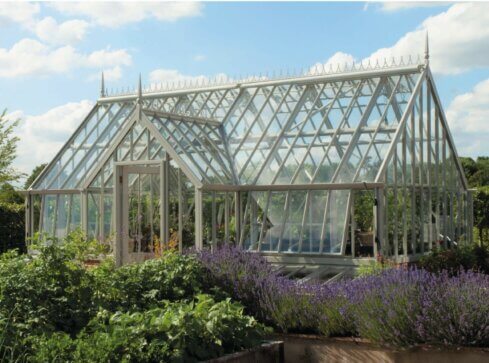


A greenhouse isn’t just a shelter for plants, it’s a way of extending and making the most of your growing seasons, and understanding what to grow in a greenhouse is the first step to making the most of that potential. Across the United States, where climates range from snowy winters in the Midwest to year-round sunshine in the South, a well-built greenhouse allows you to start earlier, protect against unpredictable weather and keep harvesting long after the outdoor beds have shut down.
When thinking about what to grow in a greenhouse, the advantage, unlike growing outdoors, is that a greenhouse provides climate control. That means you can grow with confidence for more of the year, though the exact crops and timing will vary depending on your region. In northern states this often means extending cold-season harvests, while in hot California summers it can mean keeping tender crops cool and productive.

Regional Climate Patterns & Your Greenhouse Calendar
Rather than rigid dates, think in terms of regional climate patterns when deciding what to grow in a greenhouse, since timing and crop choice will vary with conditions. A greenhouse planting calendar is less about following fixed months and more about adjusting to conditions in your area, which is why greenhouse growing tips often focus on regional differences.
In colder northern states and mountainous areas, your greenhouse acts as a powerful season extender, while in the warmer South & West Coast, it can be a year-round growing hub. This answers a common question, can you grow in a greenhouse year round? And the truth is that with the right crops and ventilation, you can. Coastal climates enjoy mild, steady conditions that suit almost constant sowing, while inland regions with hotter summers and colder winters require more seasonal adjustments.
Northern States & Mountain Regions
Winter & Early Spring
Long, cold winters mean the greenhouse is essential from late winter onwards. If you’re wondering what to grow in a greenhouse in winter, hardy vegetables are the best place to start. Crops like onions, leeks, and brassicas tolerate lower light levels and cooler soils, making them classic cool-season vegetables for greenhouse growing in this region. While tomato seedlings benefit from being started under cover before outdoor conditions are suitable. Salad leaves, spinach, and Asian greens also thrive, as they grow quickly in cooler conditions and can be harvested well before outdoor beds are workable.
Summer
During summer, your greenhouse supports heat-loving crops. This is when full tomato plants flourish, ripening consistently thanks to the stable warmth. Cucumbers and peppers also perform best in this season, as they need higher temperatures and protection from sudden cold snaps. Training cucumbers up supports maximises vertical space, while ventilation prevents humidity-related diseases like mildew. Quick crops like basil and lettuce also do well, taking advantage of the longer days but staying protected from sudden summer storms.
Autumn
As temperatures fall, your greenhouse becomes a reliable base for late harvests, especially if you’re thinking about what to grow in a greenhouse once outdoor beds are winding down. Cool-season crops like rocket and winter salads thrive because they germinate well in lower soil temperatures and grow steadily without bolting. Sow rocket, winter salads, and overwintering herbs to keep your beds productive. Parsley, chives, and mint are particularly suited because they tolerate cooler nights, and when sheltered from frost inside the greenhouse, they continue producing fresh leaves well into the colder months. This means you can enjoy a supply of herbs and greens long after outdoor beds have died back.
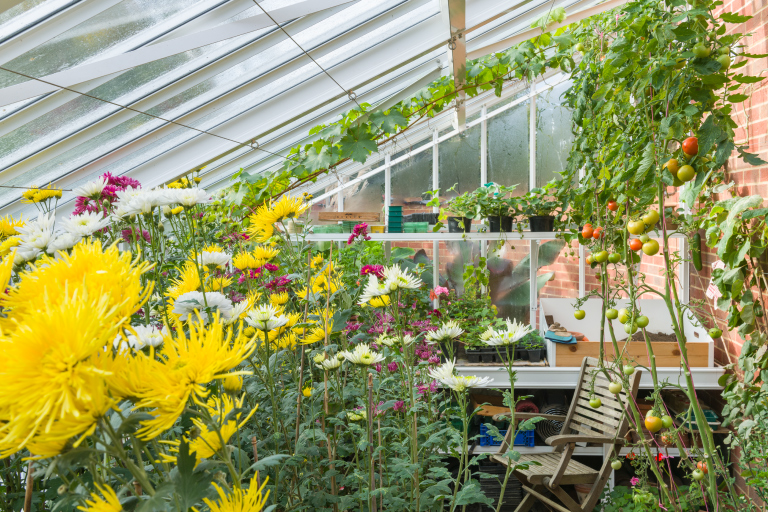
The Midwest & Mid-Atlantic
Late Winter & Early Spring
Cold but manageable winters mean greenhouses are ideal for starting crops early. Peppers, aubergines, and herbs can be sown in late winter, gaining a head start before the outdoor soil warms. By March, tomatoes and cucumbers can be started indoors, allowing seedlings to establish before being transplanted outside. Cool-weather crops like lettuce, peas, and kale thrive under cover in this period because they tolerate the cool nights but appreciate the protection from frost.
Summer
By summer, when gardeners are often asking what to grow in a greenhouse for hot, humid conditions, the focus shifts to warmth-loving plants while carefully managing humidity. Tomatoes, cucumbers, and peppers do particularly well, provided ventilation is used to prevent fungal issues such as blight and mildew, which are common in humid Midwestern summers. Training cucumbers vertically and spacing tomato plants widely helps airflow and keeps crops healthier. Quick growers like basil can also be cut repeatedly during this season, thriving in the steady warmth.
Autumn
As temperatures drop, the greenhouse extends your harvest season. Cool-weather crops such as pak choi, spinach, and kale germinate well in the cooler soils of autumn and can be grown right through to the first hard frosts. Herbs like coriander and parsley perform strongly in this season because they bolt less in cooler conditions, ensuring a steady supply of fresh leaves.
(Winter Gap)
In the darkest weeks of mid-winter (December–January), growth slows naturally due to short daylight hours, even under cover. Most gardeners use this time to protect hardy greens or dormant herbs rather than push for high yields. Supplemental heating or grow lights can keep production going, but many treat this period as a pause before the new season begins.
The South
Winter (Prime Season)
In much of the South, winter becomes the prime growing season. If you’re wondering what to grow in a greenhouse in winter, salads, chard, spring onions, and herbs are reliable choices because they thrive in the milder temperatures and avoid the intense summer heat. While outdoor beds are resting, your greenhouse can stay highly productive. Tomatoes and peppers can even be started in January, using the greenhouse warmth to give them a head start for an early spring crop.
Spring
By spring, many cool-season crops will be reaching their peak. Leafy greens, peas, and herbs benefit from the consistent temperatures before the summer heat sets in. This is also the transition point to prepare for heat-loving plants, moving tomatoes and peppers into their productive phase inside the greenhouse.
Summer
Southern summers are challenging for greenhouses, but manageable with the right tools. Good shading and ventilation are essential for preventing overheating and disease. A climate-controlled greenhouse helps keep airflow healthy and humidity under control, protecting cucumbers, peppers, and tomatoes from stress. Quick crops like basil and microgreens can still be grown successfully if placed in cooler, well-ventilated areas.
Autumn
As temperatures moderate, the greenhouse once again becomes a reliable hub for fresh harvests. Crops like coriander, parsley, and spinach perform particularly well in the autumn, since they prefer cooler nights and bolt less as the summer heat fades. This season also allows for succession planting, ensuring a steady supply of salads and herbs leading back into winter.

The West Coast
Winter
Coastal California and the Pacific Northwest enjoy milder winters that make the greenhouse a reliable year-round companion, offering plenty of options for what to grow in a greenhouse in winter without the risk of frost. If you’re considering what to grow in a greenhouse in winter here, salads, leafy greens, and overwintered herbs are some of the easiest choices, thriving in the cooler but frost-free conditions. Early sowings of tomatoes and cucumbers also do well, since the greenhouse keeps soil and air temperatures stable enough for germination and seedling growth.
Spring
Spring offers steady, moderate conditions. This is a productive time for a wide range of crops, from lettuce and peas to young cucumbers and peppers, since the climate provides enough warmth without the stress of summer heat. Many gardeners use this period to stagger plantings, building a greenhouse planting calendar that supports continuous harvests.
Summer
West Coast summers vary, but most require careful management. In California, heat can stress tender crops, so greenhouse ventilation and shading are essential to keep conditions comfortable. In the Pacific Northwest, the challenge is more often humidity, which makes good airflow important to prevent fungal problems. Tomatoes, peppers, and cucumbers will flourish with the right balance of warmth and airflow, while quick crops like basil and rocket can be grown in shaded spots.
Autumn
In cooler coastal areas, you can sow almost continuously with only a short pause in the hottest weeks. As temperatures drop in autumn, the greenhouse becomes ideal again for leafy greens, kale, and spinach, which all thrive in cooler nights. Herbs such as parsley and coriander also grow well here, as they are less likely to bolt in the milder autumn conditions.
Alitex Greenhouses: The Key to Climate-Controlled Growing
Successful greenhouse growing depends on climate control, keeping crops cool in summer, warm in winter, and protected year-round. That’s why Alitex greenhouses are designed with precision features such as high and low-level venting for natural airflow and optional external shading to dramatically reduce solar gain in the hottest periods. Together, these systems maintain the stable environment crops need to thrive, whether you’re extending salad harvests in the northern states or ripening peppers in the southern heat.
Alongside this functionality, Alitex combines classic Victorian style with precision-engineered aluminium frames that never rust, warp, or twist. The result is a structure that’s both beautiful and built to last, blending seamlessly into your garden while performing reliably in every climate.
Inside the greenhouse, benching, shelving, and tailored accessories ensure every inch of space is productive, from vertical supports for cucumbers to benches for herbs and seed trays. These practical additions help maximise yields and create a more efficient growing environment, giving you the freedom to choose what to grow in a greenhouse across every season with confidence.
At Alitex, we install our aluminium greenhouses worldwide, and through Alitex USA we guide American gardeners with everything from site planning to aftercare, making sure each greenhouse performs in its local conditions. We combine the elegance and engineering excellence of our British heritage with a deep understanding of U.S. conditions, so your greenhouse will work as beautifully in a New England winter as it does in a Californian summer. Our team can advise on placement, layout, and the right accessories to suit your climate and growing ambitions, ensuring your greenhouse supports you season after season.

Whatever your climate, your greenhouse is your constant, a place where you can sow, grow, and experiment without being at the mercy of the elements. Keep records of your sowing dates and harvests and you’ll quickly fine tune your own regional planting calendar. Whether you’re braving snowy New England, harvesting in sunny Texas or tending tomatoes on the Oregon coast, Alitex greenhouses give you the control to grow with confidence.
Ready to start your own planting journey? Let’s design a greenhouse that works beautifully for you!